

10 Furnace Safety Tips Every Homeowner Should Know
Winter weather impacts every part of the country
differently. For example, in the greater Atlanta area, thankfully we avoid huge
blizzards and sub-zero temperatures. But when temperatures dip into the
20s and 30s, as they regularly do in Marietta and across Cobb County,
homeowners lean heavily on their heating systems. That increased demand is
exactly when furnace safety matters most.
Whether you have a gas furnace, a
heat pump,
or a wood-burning fireplace, the cold months create unique safety risks. From
carbon monoxide exposure, fire hazards, and frozen pipes to equipment failure,
there are numerous risks and real problems without the right precautions. The
good news is that most of these risks are entirely preventable.
To help, understanding some essential furnace safety tips, such as an overview of the gas furnace safety devices built into modern systems and how to make sure they're working for you. If you have questions or need a professional heating inspection, our team is available 24/7.
#1: Furnace Safety Starts with Understanding Your Furnace
From the pilot light to the gas valve and furnace burner, understanding the basic operations of your main
source of heat remains a crucial safety step. For example, inspecting and
changing the filter every month to keeping flammable (or combustible) objects
away from the furnace are part of understanding how a furnace works.
Gas furnaces are reliable and safe when properly maintained, but they do operate with combustible fuel and high-voltage components. Treating your furnace with that respect is the foundation of every other tip on this list.
#2: Keep Furnace Registers Clear
Part of furnace safety means ensuring heated air
enters your living space. As a result, keep at least 20% of your furnace
registers clear and not closed off. It's also worth vacuuming your
registers monthly. Dust, lint, and pet hair accumulation restricts airflow and
can become a mild fire hazard over time, especially on or near floor registers.
#3: Watch Out for Alternative Heating Fire Risks
According to the National Fire Protection
Association (NFPA), heating is the second-leading cause of home fires, deaths and injuries in
the U.S.. Additionally, NFPA notes that the winter (i.e., December, January and
February) remain the peak months for heating fires. Typically, alternative heat
sources (i.e., space heaters) remain responsible for these fires. Therefore,
improve your safety by reducing drafty rooms, which may trigger the use of
space heaters.
If you use a space heater to
supplement warmth in a drafty room, follow these guidelines:
• Keep the heater at least three feet from anything flammable (i.e., furniture, curtains, bedding, rugs).
• Place it on a hard, level, non-flammable surface such as tile or hardwood.
•
Plug directly into a wall outlet and never use an
extension cord.
•
Never leave a space heater running when you leave the
room or go to sleep.
•
Never use a cooking range or oven as a heat source.
A well-maintained central heating system is always the safer, more efficient option for whole-home warmth.
#4: Understand Fireplace Safety
Related to alternative heating, many homes contain
fireplaces, which obviously needs to be used with care. Although sitting by the
fire remains a great winter activity, not using a fireplace correctly quickly
becomes a fire hazard. With some basic fireplace safety habits, wood and
gas fireplaces can be enjoyed without worry. The most important rules:
•
Burn only dry, seasoned hardwood (split and dried for
8-12 months minimum). Wet or "green" wood produces significantly more
creosote, which builds up in the chimney and is a leading cause of chimney
fires.
•
Never burn treated wood, construction scraps,
cardboard, or synthetic logs not rated for indoor use as these release harmful
chemicals into your home.
•
Keep the damper fully open when burning and for at
least an hour after the fire goes out to allow gases to vent properly.
•
Always use a metal or glass fireplace screen to contain
sparks and embers.
•
Never leave a fire unattended, and make sure embers are
completely extinguished before going to bed.
•
Have your chimney professionally inspected and cleaned
at least once per year and ideally before the heating season begins.
Fireplace safety in Marietta is especially relevant for older homes in established neighborhoods where chimney liners may be aged or partially obstructed. If your fireplace hasn't been inspected recently, this winter is the time to schedule it.
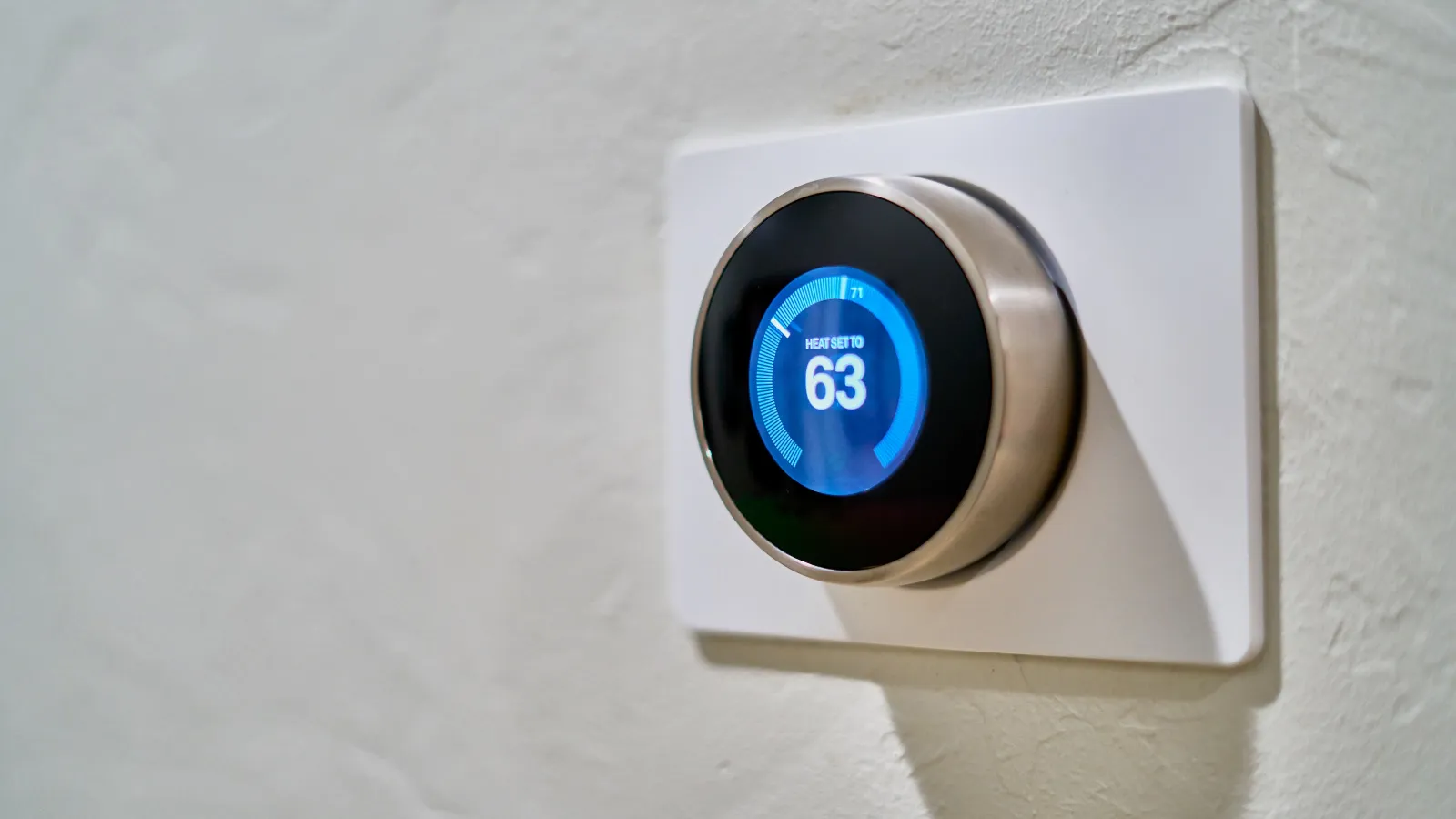
#5: Maintain Consistent Home Temperatures with a Programmable Thermostat
Many homes include some automation. In particular, many of us rely on programmable thermostats that help maintain home temperatures. Maintaining consistent (or moving temperatures slowly) helps reduce damaging furnace issues. Instead, use scheduled setpoints that gradually adjust temperatures throughout the day. Set a minimum temperature of around 62-65°F when you're away or any temperature that is low enough to save energy, but high enough to protect your pipes and keep the furnace from having to work overtime when you return home. Importantly, allow time for your home to heat up during the day (or cool down at night).
#6: Furnace Safety Helps Prevent Frozen Pipes
According to the Insurance Institute for Business
& Home Safety, burst pipes can lead to more than $5,000 in water damage.
Therefore, if you notice that water stopped flowing from the faucets, your
pipes may have frozen. However, taking some proactive steps to protect
your pipes during winter will help prevent issues.
•
Never lower your thermostat below 62°F, even when the
home is unoccupied.
•
During severe cold snaps, let faucets on exterior walls
drip slightly to relieve pressure.
•
Insulate exposed pipes in unconditioned spaces like the
garage, attic, or crawl space.
•
Know where your main water shut-off is located because
if a pipe does burst, fast action limits the damage.
If your heating system is aging or unreliable, consider scheduling a furnace inspection before the coldest months arrive.
#7: Test Your Smoke and Carbon Monoxide Detectors
Carbon
monoxide (CO) is colorless, odorless, and produced by any gas-burning appliance,
including your furnace, water heater, and fireplace. During the heating season,
when homes are sealed tightly against the cold, CO risk rises. Therefore, take
some time and test the batteries in your smoke and carbon monoxide detectors
and replace them regularly to ensure these monitors are in working order
throughout the year. Furnace safety means taking your detector
maintenance seriously:
•
Test smoke and CO detectors monthly by pressing the
test button.
•
Replace batteries at least once per year or whenever
you hear the low-battery chirp.
•
Replace the entire CO detector unit every 5-7 years and
smoke alarms every 10 years (check the manufacture date on the back).
•
Install at least one CO detector on each floor of your
home, and one near any gas-burning appliance.
•
If a CO detector alarm sounds, evacuate immediately and
call 911 and do not re-enter until the space has been cleared by emergency
responders.
#8: Never Block or Alter Your
Furnace's Venting System
Your gas furnace's flue pipe and
exhaust vents are critical components of its gas furnace safety design. They
channel combustion byproducts, including carbon monoxide and water vapor,
safely out of your home. Blocking, crimping, or modifying these vents in any
way can cause dangerous gases to back-draft into your living space.
Common mistakes to avoid:
•
Do not store items near the furnace exhaust vent
termination on the exterior of your home as snow, boxes, or vegetation can
obstruct the exhaust.
•
Never cap, tape, or cover a flue pipe, even
temporarily.
•
If you notice your furnace is venting into an
unfinished area or the exhaust pipe appears disconnected, call a professional
immediately.
•
After any significant weather event, check that the
exterior exhaust and intake vents are clear of debris, ice, or bird nesting
material.
#9: Schedule Annual Furnace
Maintenance
The single most effective
furnace safety tip is also the most consistently skipped. Simply scheduling a
professional furnace tune-up every fall before the heating
season begins. During a comprehensive inspection, a certified technician will:
•
Inspect and test all gas furnace safety devices,
including the limit switch, flame sensor, and pressure switch.
•
Check the heat exchanger for cracks or corrosion that
could allow CO to enter the airstream.
•
Clean the burners and verify proper combustion.
•
Test the flue and draft to ensure combustion gases are
venting correctly.
•
Lubricate moving parts and check electrical
connections.
•
Identify any components that are aging or approaching
failure before they leave you without heat.
Snappy
Savings Club members receive annual heating and cooling tune-ups
as part of their membership, along with priority scheduling and 10% off all heating repairs. It's
the most convenient way to stay on top of furnace safety year after year.
#10: Know When to Call a Professional
Some warning signs require a
professional evaluation and probably furnace repair
work. Others require you to leave the home first and call for help from
outside. Know the difference and contact a local
HVAC repair service if warning signs emerge, such as:
•
Your furnace is short-cycling (turning on and off
frequently without reaching the set temperature).
•
You hear unusual sounds like grinding, banging,
squealing, or persistent clicking.
•
You smell something musty or like burning dust when the
heat first kicks on (brief at start of season is normal, but ongoing is not).
•
Your energy bills are rising without a change in usage
habits.
•
The pilot light or burner flame is yellow or orange
instead of blue.
Leave the home immediately
and call 911 if:
•
Your carbon monoxide detector alarm is sounding.
•
You smell rotten eggs or a strong sulfur odor (this is
the odorant added to natural gas and means there is a potential gas leak).
•
Anyone in the home is experiencing unexplained
headaches, dizziness, or nausea that improves when they go outside.
Do not re-enter the home until
emergency responders confirm it is safe. Do not try to locate the gas leak
yourself.
Gas Furnace Safety Devices: What's Protecting Your Home
Fortunately, modern gas furnaces
are engineered with multiple layers of built-in protection that helps keep your
family safe. These gas furnace safety devices are designed to shut the system
down before a dangerous condition can develop, but only if they're functioning
correctly and haven't been bypassed or neglected. Understanding what each one
does helps you appreciate why regular professional maintenance matters.
1.
The Limit Switch
The limit switch monitors the
temperature inside the furnace heat exchanger. If the internal temperature
rises too high, often due to a blocked filter, a closed-off duct, or a
mechanical issue, the limit switch shuts the burner off to prevent overheating
and potential heat exchanger damage.
A furnace that frequently shuts
off before reaching your set temperature (called "short cycling") may
be triggering the limit switch repeatedly, which is a warning sign worth
investigating. Left unaddressed, a failing limit switch or chronic overheating
can crack the heat exchanger, which is one of the most expensive furnace repairs,
and one with CO exposure implications.
2.
The Flame Sensor
The flame sensor is a small
metal rod positioned in the burner assembly. Its job is to verify that the
burner has actually ignited after the gas valve opens. If the sensor doesn't
detect a flame within a few seconds, it signals the control board to close the
gas valve immediately and prevents unburned gas from accumulating in the heat
exchanger or exhaust system.
Over time, flame sensors develop
a thin coating of oxidation that interferes with their ability to detect the
flame accurately. This causes the furnace to shut off shortly after ignition.
Fortunately, this is a problem that's easily resolved during a professional
tune-up with a simple cleaning, but that can leave a household without heat if
left unaddressed.
3.
The Pressure Switch
Gas furnaces rely on a draft
inducer motor to pull combustion gases through the heat exchanger and push them
out of the flue. The pressure switch monitors the negative pressure (suction)
created by this process. If the inducer motor fails, the flue is blocked, or
the pressure switch detects an abnormal reading, it prevents the gas valve from
opening entirely.
This is a critical gas furnace
safety device because a blocked or poorly drafting flue can cause combustion
gases, including carbon monoxide, to back up into the living space instead of
venting outside. A tripped pressure switch is often a symptom of a bigger
issue: a failing inducer motor, a cracked drain tube, or a partially blocked
exhaust vent.
Stay Safe This Winter with Snappy Services
Furnace safety isn't a
once-a-year checkbox. Effective furnace safety is a collection of habits,
awareness, and proactive maintenance that together keep your home and family
protected all season long. From understanding how your gas furnace safety
devices work to knowing the right response when something seems wrong, the steps
above can make a real difference.
If you're due for a heating
inspection, have concerns about your furnace's performance, or want to learn
more about our maintenance plans, the team at Snappy Electric, Plumbing,
Heating & Air is here to help. We serve Marietta, Dunwoody, Woodstock, and
communities throughout the greater
Atlanta area.
Contact us to schedule your furnace inspection today.