

When to Replace or Upgrade Your Electrical Panel
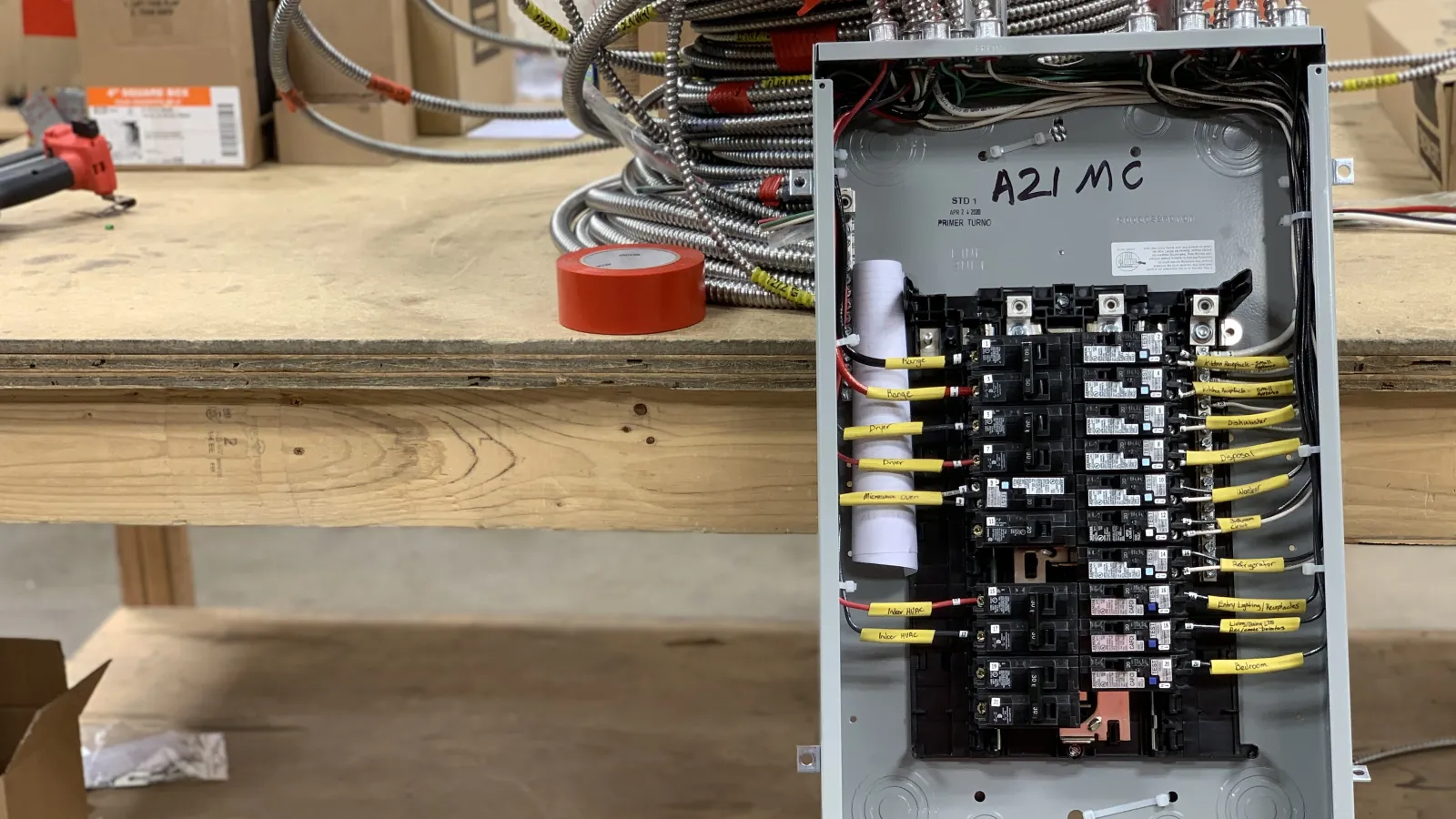
Your electrical panel
is the hub of every circuit in your home. It receives power from the utility,
distributes it across circuits, and protects each one with a breaker that trips
when current exceeds a safe limit. Most homeowners never think about it until
something goes wrong, and that is precisely the problem. An outdated or
overloaded panel does not always announce itself with obvious failures. It
shows up in subtler ways like breakers that trip a little too often, outlets
that feel warm or lights that flicker when the microwave runs.
Knowing when to upgrade your
electrical panel, and what electrical panel changes involve, can protect your home from fire risk, prevent costly damage to appliances and electronics, and give you the capacity to support how modern households use
electricity. This guide covers the seven most common signs that it's time to
act, what the upgrade process involves, and how to approach the decision with
confidence.
7 Signs You Need to Replace or Upgrade Your Electrical Panel
If you recognize any of the
following in your home, it is worth scheduling a professional evaluation. Each
is covered in detail below.
·
Electrical panel is 25 or more years old and has never been
replaced
·
Breakers trip frequently under normal household use
·
Major appliances, an EV charger, or a home addition recently added
·
House still utilizes a fuse box rather than a breaker panel
·
Notice flickering lights, warm outlets, burning smells that signal
faulty wiring
·
Home includes a recalled panel brand (Federal Pacific, Zinsco, or
Pushmatic)
·
Home inspection flagged the panel (likely during the selling
process)
When Is It Time to Update Your Electrical System?
1. Your Panel Is 25 or More Years Old
Most residential electrical
panels are designed to last 25 to 40 years, but age alone is not the full
picture. A panel that was properly sized and installed in a home that has not
changed significantly may still be functioning adequately at 30 years. The
issue is that most homes have changed significantly. Central air conditioning,
dishwashers, home office equipment, flat-screen televisions, gaming systems,
and smart home devices have added load to circuits that were sized for the
appliances of a different era.
According to the Electrical Safety Foundation International,
home electrical fires account for an estimated 51,000 fires each year in the
United States, with aging electrical infrastructure among the leading
contributing factors. If your panel predates 2000 and has not had a
professional evaluation recently, that is reason enough to schedule an electrical safety inspection. A licensed
electrician can assess whether your panel still meets your home's actual demand
and current code requirements.
2. Breakers Trip Frequently Under Normal Use
A circuit breaker that trips
occasionally is doing its job. A breaker that trips regularly under normal
household use is telling you something. The most common causes are a circuit
that is carrying more load than it was designed for, a failing breaker that can
no longer hold its rated amperage reliably, or a panel that lacks the overall
capacity the home currently needs.
The tempting fix is to reset the
breaker and move on. However, if the breaker keeps tripping, it is a
signal to act. For example, if the same breaker trips under the same conditions
repeatedly, the circuit needs evaluation. If multiple breakers throughout the
panel are tripping with increasing frequency, the panel itself may be the
issue. Neither is a situation to ignore, because a breaker that cannot trip
reliably can no longer protect the circuit it is meant to
serve.
3. You Are Adding Major Appliances, an EV Charger, or a Home Addition
Adding a new high-draw appliance
or a dedicated circuit to an existing panel is one of the most common triggers
for discovering that an upgrade is necessary. A Level 2 EV charger requires a dedicated 40 to
50-amp circuit. A hot tub typically requires a dedicated 50 to 60-amp circuit.
A new HVAC system installation sometimes requires more panel capacity than the existing box has. A home addition with new rooms, outlets, and
lighting adds circuits that an older panel may not accommodate
without a corresponding upgrade.
Before any of these projects
begins, a licensed
electrician should assess whether your current panel has the available
capacity and can safely support the new load. In many cases, the answer is yes
and the project proceeds without a panel change. In others, the assessment
reveals that the panel upgrade is the prerequisite to everything else. Knowing
that before construction starts rather than discovering it mid-project saves
both time and money.
4. Your Home Still Has a Fuse Box
Fuse boxes were the standard in
American homes built before the 1960s, and some are still in service today.
They work on the same principle as circuit breakers, using a fuse that burns
out when current exceeds a safe level to interrupt the circuit. The problem is
that a blown fuse must be replaced rather than simply reset, and more
significantly, fuse boxes were designed for electrical loads that bear no
resemblance to a modern home's demand. Many fuse
box systems are also incompatible with the grounding requirements of modern electrical safety standards. Ultimately, if your home has a fuse
box, replacing it with a modern breaker panel is almost certainly the right
long-term decision.
5. You Notice Signs of Faulty Wiring
The electrical panel is not
always the source of a problem, but it is the right place to start an
investigation when symptoms appear throughout the home. Faulty wiring can
develop from poor original workmanship, rodent damage to insulation, water
infiltration near electrical components, or simply decades of thermal cycling
that loosens connections over time.
Symptoms worth taking seriously
•
Lights that flicker or dim when appliances cycle on
•
Outlets or switch covers that feel warm to the touch
•
A burning smell or a faint ozone odor near the panel or
outlets
•
Scorch marks or discoloration around outlets or the
panel face
•
Small shocks when touching switches or metal fixtures
Don't ignore these symptoms or dismiss them as minor quirks of an old house. Each can precede an arc fault, which accounts for a significant share of
residential electrical fires. An electrical safety inspection can pinpoint the
source and determine whether the solution is a targeted repair or a broader
panel and wiring evaluation.
6. You Have a Recalled Panel Brand
Certain panel brands
manufactured primarily in the mid-twentieth century have documented safety
records that make them worth replacing regardless of apparent function. The
three most commonly encountered in Georgia
homes are Federal Pacific Electric (FPE) Stab-Lok panels, Zinsco panels,
and Pushmatic panels. Each has been associated with breakers that fail to trip
reliably during overloads or short circuits, which removes the primary
protective function the panel is supposed to provide.
If you are unsure whether your
panel falls into one of these categories, a licensed electrician can identify
the manufacturer during a routine inspection. If it does, replacement is the
appropriate course of action. Running a recalled panel because it appears to be
working is a significant and unquantifiable safety risk.
7. You Are Selling Your Home and a Home Inspection Flagged the Panel
Home inspectors routinely flag
electrical panels during buyer's inspections, and panel-related findings are
among the most common reasons electrical work comes up in real estate
transactions. An outdated panel, a recalled brand, a panel that lacks adequate
amperage for the home's square footage, or visible signs of prior DIY work
inside the panel are all common findings that buyers and their lenders take
seriously.
Addressing the panel before
listing, rather than negotiating it as a credit after the fact, puts sellers in
a significantly better position. A documented panel replacement by a licensed
contractor with pulled permits and a passed inspection is a stronger selling
point than a credit that leaves the buyer wondering whether the work will get
done. Even if you are not planning to sell in the near term, knowing your
panel's condition removes one of the most common last-minute surprises from the
transaction.
How to Upgrade Your Electrical Panel
Understanding how to upgrade an
electrical panel helps set realistic expectations before the project begins.
The process is not a DIY task. Georgia requires a licensed electrical
contractor to perform electrical panel work, and the local building authority must permit and inspect the installation. A permit is not a
formality. It triggers an independent inspection that confirms the work was
done correctly and to code, which matters for your family's safety and for your
home's records.
Here is what a typical panel
upgrade involves.
•
Assessment and load calculation. A licensed
electrician evaluates your current panel, documents existing circuits, and
calculates the amperage your home requires based on current and anticipated
load. This determines whether a 150-amp or 200-amp service is appropriate.
•
Utility coordination. In most cases, the utility
company needs to be notified and may need to temporarily disconnect service at
the meter to allow safe work on the main service entrance.
•
Panel removal and replacement. The existing
panel is removed, the new panel is mounted and connected to the main service
entrance, and all existing circuits are transferred to the new panel and
properly labeled.
•
Wiring corrections. If the inspection during
removal reveals code violations, improperly sized breakers, or wiring issues, the team addresses them as part of the project.
•
Permit and inspection. The electrician pulls the
permit before work begins, and a city or county inspector reviews the completed
installation. Snappy handles both steps as a standard part of every panel job.
Not Sure Whether You Need a Panel Upgrade?
The clearest way to find out
whether your electrical panel needs to be replaced or upgraded is a
professional assessment by a licensed electrician. Snappy Electric, Plumbing,
Heating & Air offers comprehensive electrical safety inspections that include
a full panel evaluation, and we provide honest, upfront recommendations without
pressure to approve work you do not need.
If you are worried about
electrical panel upgrade or replacement costs, Snappy provides upfront, written
pricing before any work begins, and flexible
financing is available for qualifying customers. Members of the Snappy Savings Club receive 10% off all
electrical work. Check our current coupons for seasonal offers on panel
replacement.
We serve homeowners throughout
Marietta, Woodstock, Kennesaw, Dunwoody, Smyrna, and the greater North Atlanta
area, available 24 hours a day with no extra charge for evening or weekend
calls.
Contact us or request
service online. If you want ongoing electrical maintenance and priority scheduling in one plan, ask about the Snappy Savings Club.