

Energy Efficient Home Solutions to Reduce Your Summer Electric Bill
If your electric bill seems to double between May and
September, you're not imagining it. Georgia summers are genuinely among the
most demanding in the country for residential energy use, and homeowners feel
that pressure acutely. The combination of relentless heat, high humidity, and
Georgia Power's tiered summer rate structure means that every degree your air
conditioner has to fight for costs more than it did the month before.
The good news is that high summer energy bills are not
inevitable. Understanding what drives the summer spike, and addressing it with
a targeted mix of DIY habits and professional energy efficient upgrades can
meaningfully reduce your summer electric bill.
Why Your Power Bill Spikes in Summer
According to Georgia Power, residential customers who consume 1,000 kilowatt-hours of electricity per month pay an average of $171 annually. However, in July, when air conditioners run hardest, that same customer's average bill jumps to around $266. To make matters (and wallets) worse, that $95 single-month swing compounds. For instance, the average residential bill in the area has increased by $43 per month since 2022.
Three factors work together to create that spike, and
understanding each one helps you focus your energy-saving efforts.
Cooling Demand
Air conditioning accounts for roughly 19% of total annual electricity use in U.S. homes, but that figure represents an annual average that includes cold-weather months with no cooling demand at all. In hot-humid regions like the Southeast, air conditioning represents more than double the national share of home energy costs. In a Marietta home running the AC from late April through October, the cooling system is by far the largest single item on the bill. However, temperature alone doesn't tell the full story of why Atlanta-area cooling costs run so high. Humidity is the multiplier that most homeowners don't account for. Your air conditioner doesn't just cool the air. The AC also removes moisture, and in a climate where summer relative humidity regularly exceeds 70%, that dehumidification function significantly extends every cooling cycle.
When indoor humidity stays elevated, 74 degrees can feel
like 80. The instinct is to lower the thermostat, which makes the AC run longer
and harder. While the AC runs, the underlying moisture problem remains
unaddressed. Homes without adequate humidity control often run their AC more
than necessary simply because the air never feels comfortable, even when the
temperature reading is technically fine.
Georgia Power's Tiered Summer Rate Structure
Georgia Power's standard residential pricing isn't flat
year-round. From
June through September, the per-kWh rate increases in tiers: 8.6 cents for
the first 650 kWh, 14.3 cents for 651 to 1,000 kWh, and 14.8 cents for each kWh
above 1,000. A home that uses more than 1,000 kWh in July (which is easy in a hot
summer) pays nearly double the per-unit rate for that excess usage compared to
what it pays in October. Managing consumption to stay within lower tiers is one
of the highest-return energy strategies available to Georgia Power customers.
DIY Steps Toward a More Energy Efficient Home
Several of the most impactful summer energy moves cost
nothing and take under an hour. Start here before investing in upgrades.
Replace Your Air Filter
A clogged air filter is one of the most common causes of AC
inefficiency. When airflow through the system is restricted, the blower motor
works harder, the evaporator coil can ice over, and the system runs longer
cycles to achieve the same amount of cooling. Check your filter monthly during
peak season and replace it every one to three months. This single habit has a
measurable effect on both energy consumption and system longevity. For more on
how your system handles these challenges, contact a home energy
solutions provider in your area, such as Snappy Services.
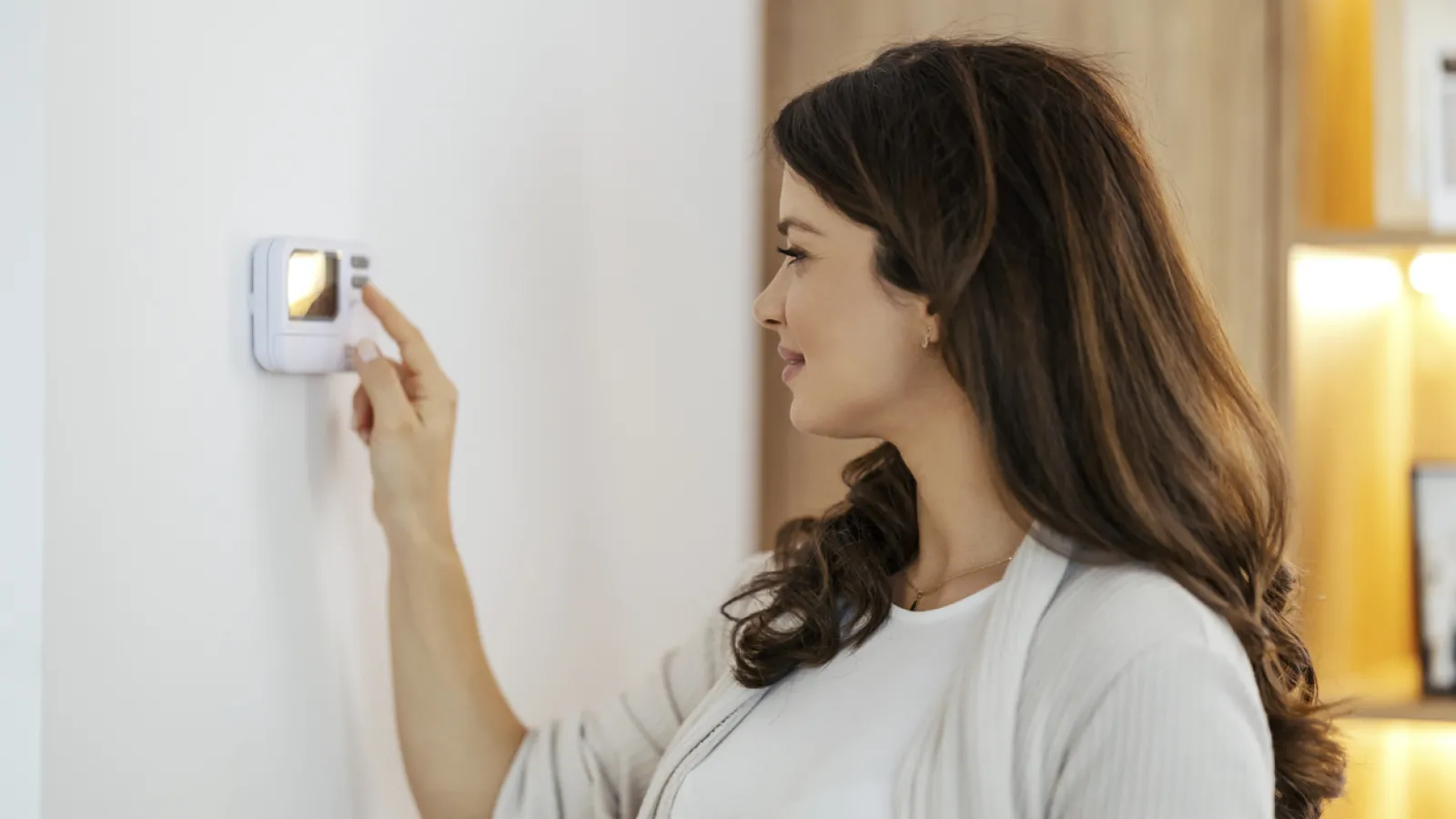
Utilize a Programmable Thermostat Strategically
The Department of Energy recommends setting your thermostat
to 78 degrees when you're home and allowing it to rise when the house is empty.
Every degree above your normal cooling setpoint reduces energy use by
approximately 3%. A programmable
or smart thermostat automates this without requiring daily manual
adjustments and can reduce cooling costs by 10% or more annually. Also consider
shifting high-energy tasks, such as laundry and dishwashing, to the evening
hours. Georgia Power's peak demand window runs from 2 PM to 7 PM, and usage
during those hours drives up costs disproportionately under tiered pricing.
Reduce Internal Heat Gain
Your AC is fighting two sources of heat: outdoor
temperatures and heat generated inside the home. Reducing internal heat gain
lowers the burden on your system without touching the thermostat. Close blinds
and curtains on south- and west-facing windows during peak afternoon sun hours.
Switch to LED lighting if you haven't already, because incandescent bulbs
convert only about 10% of their energy to light, with the remaining 90%
released as heat. Avoid running the oven during the hottest parts of the day in
summer.
Clear and Check the Outdoor Condensing Unit
The outdoor unit needs at least two feet of clearance on all
sides to operate efficiently. Trim back any shrubs or vegetation that have
grown around it over the spring, and clear any debris (leaves, grass clippings,
seed pods) from the unit's fins. A blocked or restricted condenser cannot
release heat effectively, forcing the compressor to work harder and increasing
energy consumption. This takes about ten minutes and costs nothing.
Check and Seal Obvious Air Leaks
Conditioned air leaking out of the home and hot outdoor air
seeping in both force your AC to run longer to compensate. Walk through your
home and check weatherstripping around exterior doors, caulking around window
frames, and any penetrations in the building envelope (where pipes or wires
enter the home). A tube of caulk and an afternoon of sealing can meaningfully
reduce infiltration loads.
Professional Upgrades for a More Energy Efficient Home
While DIY energy efficient upgrades help reduce wasted
usage, professional solutions address the underlying systems that determine how
much energy your home requires to stay comfortable. These are the
highest-return investments for Marietta homeowners looking to meaningfully
lower summer bills.
Schedule an AC Tune-Up Before Peak Season
A well-maintained air conditioner runs more efficiently and
dehumidifies more effectively than one that hasn't been serviced in a year.
During a professional AC tune-up,
a technician will clean the evaporator and condenser coils (dirty coils reduce efficiency and dehumidification capacity first), check refrigerant levels, verify that the condensate drain is clear, test all electrical connections, and confirm that the system is operating within manufacturer specifications. A system
running at peak efficiency uses less energy to achieve the same cooling output.
Schedule in April or May before demand and wait times increase.
Have Your Ductwork Inspected for Leaks
Leaky ductwork is one of the most underappreciated sources
of wasted cooling energy in Atlanta-area homes. The Department of Energy
estimates that the typical home loses 20 to 30% of
conditioned air through duct leaks before it ever reaches the living space.
In an older Marietta home where ductwork hasn't been inspected in years, that
figure can be higher. Snappy's technicians can perform a duct leakage
assessment and seal problem areas, directly reducing the volume of conditioned
air your system must produce to maintain comfort.
Consider a Whole-Home Dehumidifier
For homes where humidity is a persistent summer comfort
problem, a whole-home dehumidifier is one of the most targeted solutions
available. Unlike portable dehumidifiers that treat a single room, a whole-home
unit integrates directly with your HVAC system and maintains the entire home's
relative humidity within a set range (typically 45 to 55%). When indoor
humidity is properly controlled, the air feels comfortable at a higher
thermostat setpoint, which reduces AC runtime and energy use. This is one of the
home energy
solutions Snappy recommends specifically for Georgia's climate, where
humidity control often delivers more comfort improvement than a degree or two
of temperature reduction.
Upgrade to a High-Efficiency AC System
If your air conditioner is 12 years old or older, it is
almost certainly operating at a fraction of the efficiency a modern system
would deliver in the same conditions. The federal minimum SEER2 efficiency
rating for new central AC systems in the Southeast is 15.2 and systems rated 17
or above can reduce cooling energy use by 20 to 40% compared to an aging system
running at the old federal minimum. In a Georgia home with a six-month cooling
season, that efficiency gap translates to real savings on every summer bill.
Snappy's AC
installation team can assess your current system and provide an honest
evaluation of whether repair or replacement makes more financial sense.
Add Attic Insulation
Attic insulation is one of the highest-ROI energy upgrades
available to homeowners in hot climates. An under-insulated attic allows
radiant heat from the roof to transfer directly into the living space,
dramatically increasing the cooling load your AC must manage throughout the
day. The DOE recommends insulation with R-38 to R-60 for attics in Georgia's
climate zone. If your attic insulation is visibly thin, old, or damaged, adding
insulation is a one-time investment that pays dividends on every summer bill
for the life of the home.
How Snappy Can Help Lower Your Summer Energy Bill
Implementing energy efficient solutions helps reduce your summer energy costs and doesn't require a dramatic move. Improving the efficiency of your home is the combination of good habits, a well-maintained system, and targeted upgrades that turn any Marietta area home into a more energy efficient home, which adds up to real savings. The best time to address most of these items is before peak season, while scheduling is flexible and your AC isn't already operating at maximum capacity.
Snappy Electric, Plumbing, Heating & Air helps Marietta
homeowners with everything from seasonal AC
tune-ups and system
replacements to comprehensive home energy
solutions consultations. Contact us today or request service online.
And if you want annual tune-ups, priority scheduling, and 10% off every service
call built into one simple plan, ask about the Snappy
Savings Club.